
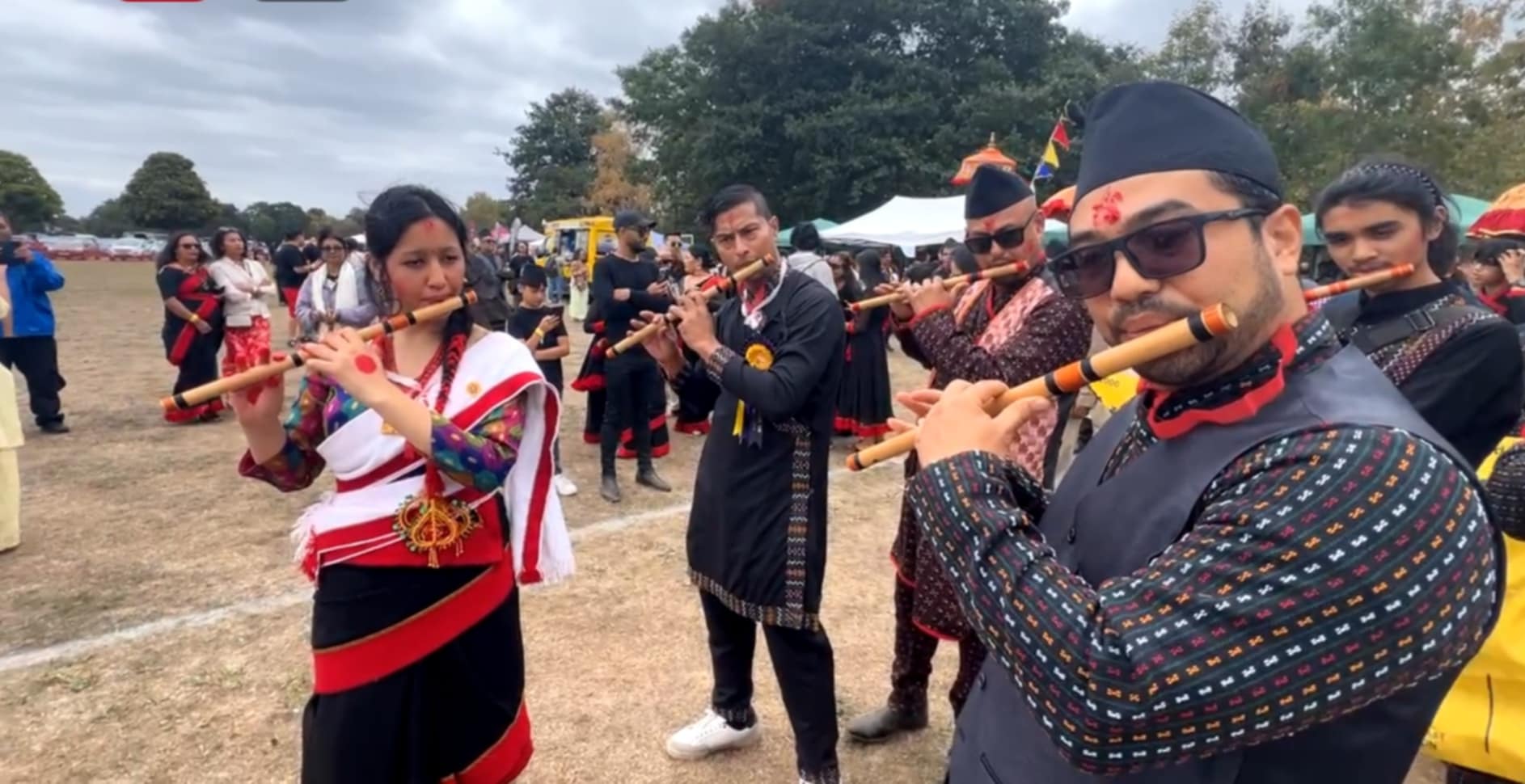
Nowadays, there is a trend of using the word 'Newari' to describe the language, literature, culture and traditions of 'Newar', a major community of Nepal.
The question of where, how and why this trend started is a different one, but the community concerned has not accepted it. They feel humiliated by the use of such a word. Even if someone uses the word in a good context and with good intentions without understanding this meaning, it is causing trouble. The correct name is 'Newar', and it is certainly not unjust to request that the name not be corrupted.
In this context, it is not logical to say that the word 'Newari' is used as an adjective related to Newar. There is no trend of adding a long vowel at the end to give a new form to the word when referring to the language, literature and culture of Gurung, Magar, Tamang, Sunuwar, Dhimal, Chepang, Chhantyal, Jirel, Surel, Danuwar, Satar, etc. Moreover, this rule does not apply to the Khas community, which is related to the origin of the Nepali language. Although the word ‘Khasiya’ is used in historical sources, it is not in use today.
Conscious Newars prefer to call it ‘Nepalbhasha’ instead of ‘Newari Bhasha’. The fact that the name of this language is mentioned as ‘Nepalbhasha’ in historical sources also inspired them to do so. Although the official name of the language is ‘Nepalbhasha’, it can also be called ‘Newarbhasha’ because it is the ‘language of the Newars’.
The context of why it is called ‘Nepalbhasha’ is related to history. ‘Newar’ and ‘Nepal’ are not two different words, but two different forms of the same word. According to French scholar Silva Levy (c. 1863-1935), the word ‘Newar’ originated from ‘Nepar’. In this way, the word ‘Nepal’ became popular as a local word was ‘Sanskritized’. Baburam Acharya also argues that the word ‘Nepar’ was ‘Sanskritized’ to become ‘Nepal’. He is of the opinion that there is only one letter difference between the words Nepar and Newar and that it was natural for Nepar to become Newar and Newar to become Newar.
According to historian Acharya, the Magadhi language was prevalent in Bihar, India, and the ref was not pronounced in it, instead ‘l’ was used. For this reason, the local Newar word was spoken as Nepal in Pataliputra and it seems that Kautilya adopted it in Sanskrit. Since Sanskrit is not used in colloquial speech, it has no power to develop. It seems that this word has come into use due to the qualities or qualities in that language.
In Newar, there is a unique custom of shortening common nouns while keeping the original word intact. Jhyah, Lah, Pasah, etc. are words in which the original is shortened. According to grammar, when the declension mark or letter is removed from the words jhyalam, lakham, pasalam used in the third and seventh declension and jhyalay, lakhay, pasalay used in the seventh declension, the original word jhyalam, lakhay, pasal appears. This community calls itself 'Newah', but its original word is 'Newal' or 'Newar'. This also makes it clear that there is only a vowel difference in the words Nepar, Newar, Newal, Nepal.
In ancient times, both this land and its inhabitants were called by the same word 'Nepal'. The evidence for this claim is the records of Chitlang. The phrase 'Swasti Naipalebhyah' used in the records means 'Nepals' in the plural in the sense of inhabitants. Therefore, all those living in Nepal are Newars (Nepal) or everything related to Newar is Nepal.
It is clear from historical examples that Newar and Nepal are not two different words but one and the same. But in the course of historical development, Nepal (the current political territory) is no longer associated with Newar (a particular community). Following the old tradition, by expanding the meaning, all the inhabitants of the current territory are Nepal or Newar. This same word Nepal or Newar is currently referred to as the word 'Nepali'.
To put it more clearly, if Prithvi Narayan Shah or his successors had named this country 'Gorkha' during the expansion of the state, all the inhabitants of Mechi, Mahakali and Himalayas to Terai, who have Nepali identity today, would have been known as 'Gorkhali' and within that, only the Newar community would have carried the 'Nepali' identity. It is worth remembering that the name of this country, which encompasses a wide territory, was kept as 'Gorkha' for a short time, but over time it came to be 'Nepal'.
Nepar, Nepal, Newar, Newal, Newa: Although they are called different forms of the same word, one question arises - what does it mean? Although many have worked on the etymology of the word Nepal, there is no consensus. If Nepal was formed by ‘Sanskritizing’ Nepal, Nepal, or any other local word, instead of pursuing the study of the original word, instead of pursuing the study of the new form of the word that developed later, it would be like wandering around in the same place. Therefore, those who seek etymology or interpret it seem to be wandering in the same place. Therefore, it is absolutely necessary for scholars in this regard to go beyond the later Sanskritized word ‘Nepal’ and return to the original word.
There is also a group that studies the word Nepal by linking it with the ‘Neep’ caste. It may be a 'school of thought' to insist that Sanskrit is the mother of everything, but it is extremism to insist that it must be applied in all places and contexts. This also carries the risk of establishing dominance by erasing someone's originality in the name of study. When determining the origin of Sanskrit and the sequence and time of its spread, it is seen that Sanskrit language entered not only Nepal but also the Indian territory only much later.
The question is repeated again, what is the meaning of the word Nepal? Knowing its etymology or giving its meaning is not a trivial task. According to the sources received, the first evidence of the word 'Nepal'

More from Basanta Maharjan





Comments (0)
No comments yet
Be the first to comment!
Write a Comment